Become Part of Building a Sustainable Agroforestry System
Nature Contribution Units enable companies to support real project areas while transparently documenting their contributions to biodiversity, climate resilience, and local value creation.

Companies today are facing a new reality:
Sustainability is no longer just communication — it has become part of regulation, risk management, and corporate strategy. With the CSRD and the European Sustainability Reporting Standards (ESRS), companies will increasingly be required to transparently demonstrate:
- what impact they have on nature and the climate
- how they manage risks within their supply chains
- which concrete measures they are implementing.
Yet many companies face the same challenge:
There is a lack of real projects that can be reported on with credibility.
Es fehlen reale Projekte, über die glaubwürdig berichtet werden kann.
Nature Contribution Units (NCUs) close exactly this gap.
Every euro generated through NCUs flows directly back into Finca Fuente Vieja — into the restoration of a fully functioning Arabica coffee plantation within an agroforestry system.
What Are Nature Contribution Units?
A Nature Contribution Unit (NCU) is a voluntary contribution to nature that enables companies to directly support the preservation and development of an agroforestry system.
At Finca Fuente Vieja, this means:
1 NCU = 1 hectare of real project land.
This land is developed and maintained over the long term as a biodiverse agroforestry system.
By doing so, companies directly support:
- the protection of existing tree structures
- the development of a sustainable agroforestry system
- the long-term cultivation of Arabica coffee beneath shade trees
- ecological stability and local value creation.
An NCU is therefore not an abstract sustainability measure, but a direct contribution to a real and living landscape.
Why Agroforestry?
An agroforestry system combines agriculture with forest structure.
Instead of monocultures, diverse systems are created consisting of:
- shade trees
- coffee and agricultural crops
- fruit trees
- natural vegetation.
At the same time, this system creates:
- greater biodiversity
- more stable soils
- improved water retention
- increased resilience to climate change.
In the case of Finca Fuente Vieja, the agroforestry system forms the foundation for a long-term, sustainable Arabica coffee production within a shaded forest ecosystem.
By doing so, companies actively contribute to the development of a regenerative agricultural system.
Biodiversity and Ecosystems
(ESRS E4)
NCUs primarily address the area of Biodiversity & Ecosystems.
By supporting the project area, companies help create, among other things:
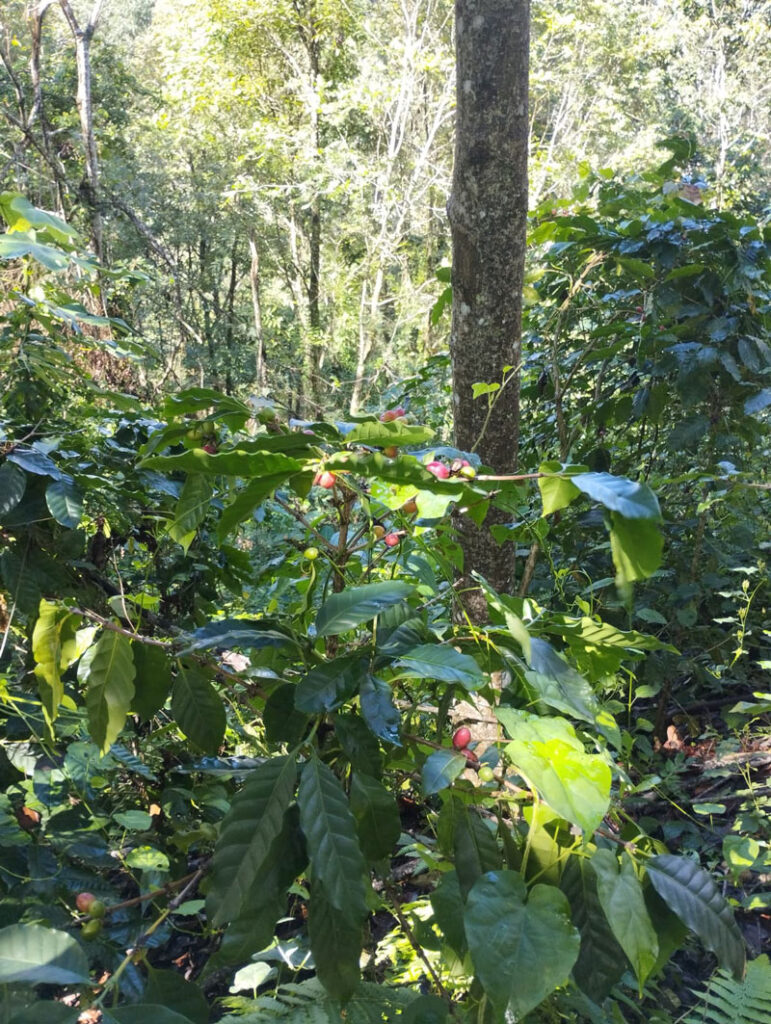
- the long-term preservation of existing tree populations
- the promotion of species-rich vegetation
- the stabilization of the local water cycle
- the development of a biodiverse agroforestry system.
Companies can present this contribution as part of their sustainability reporting, for example through:
- supported land area (hectares)
- measures taken to protect ecosystems
- long-term land-use strategies.

Climate Impact as an Additional Benefit
(ESRS E1)
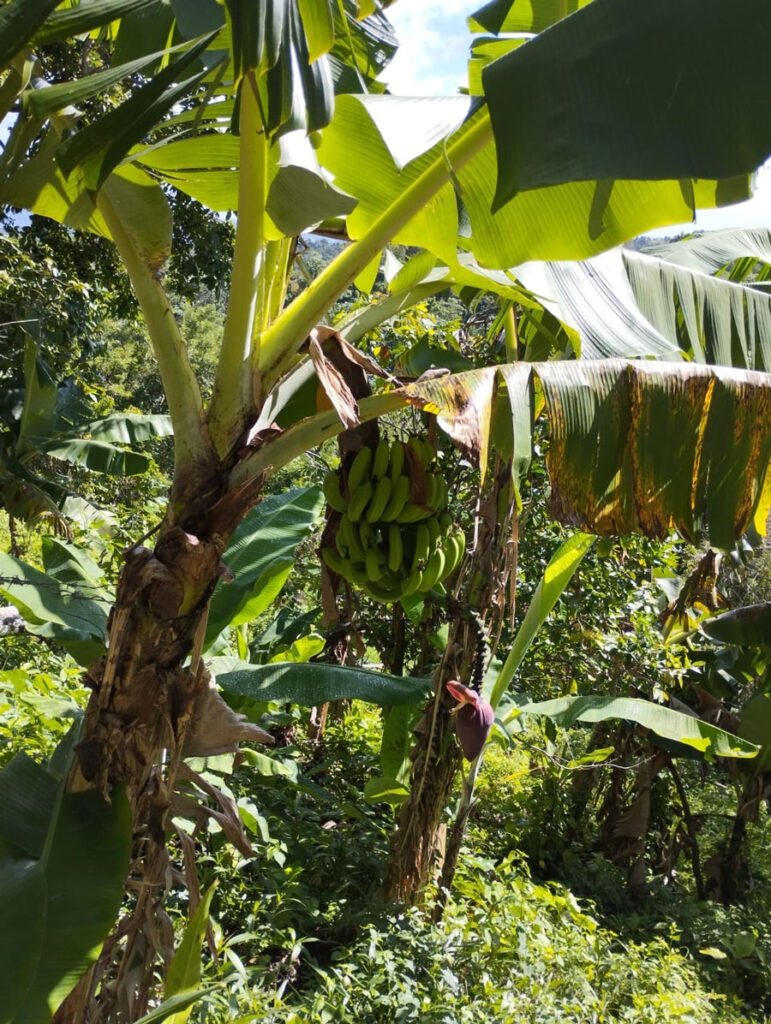
Agroforestry systems store carbon in both biomass and soil.
At Finca Fuente Vieja, the average carbon storage is conservatively estimated at:
approximately 5–7 tons of CO₂e per hectare per year.
This climate impact is documented transparently.
Important:
NCUs are
- not carbon credits
- not offset mechanisms
- not emissions compensation instruments.
The carbon storage is reported solely as an impact metric.
Supply Chains and Local Impact
(ESRS S2 / S3)
A central part of the project is the integration of the local community and agricultural value creation.
The development of an agroforestry system creates:
- long-term agricultural jobs
- local income opportunities
- knowledge transfer in sustainable farming practices
- stable production systems for agricultural raw materials.
Companies can therefore also demonstrate contributions in the area of
S2 – Workers in the value chain and S3 – Affected communities darstellen.
This creates a sustainability project that combines ecological and social impact.
A Platform for Sustainable Raw Material Systems
Langfristig verfolgt Finca Fuente Vieja ein klares Ziel:
den Aufbau eines nachhaltigen Arabica-Agroforstsystems, das Biodiversität, Landwirtschaft und lokale Entwicklung verbindet.
Unternehmen können sich an diesem Aufbau beteiligen.
Je nach Engagement kann daraus entstehen:
• ein Biodiversitätsprojekt
• eine lieferkettennahe Nachhaltigkeitsmaßnahme
• eine Plattform für langfristige Kooperationen im Bereich nachhaltiger Rohstoffe.
Transparency and Documentation
Companies do not simply receive a certificate.
Each NCU is accompanied by a structured NCU Documentation Package. This includes:
- NCU confirmation
- project description
- map extract of the supported area
- management and protection guidelines
- annual monitoring updates
- unique NCU ID and project ID.
Climate Co-Benefit Sheet documenting carbon storage.
This allows the initiative to be documented and reported transparently, both internally and externally.

Legal Classification
Nature Contribution Units are voluntary contributions to nature. They do not replace:
- regulatory obligations
- emissions reductions
- climate targets.
The reported carbon storage serves solely as an impact indicator and is not used for offsetting purposes.